Securing an experienced emergency plumber in los angeles mitigates structural framing decay, electrical fire risks, and interior toxic mold propagation when pipe assemblies burst or sewer mains back up. Direct communication with localized dispatch personnel bypasses automated national call-routing directories, deploying fully equipped service vans carrying mechanical snaking cables, acoustic listening gear, and pipe-threading tools directly to private properties when water fails near me.
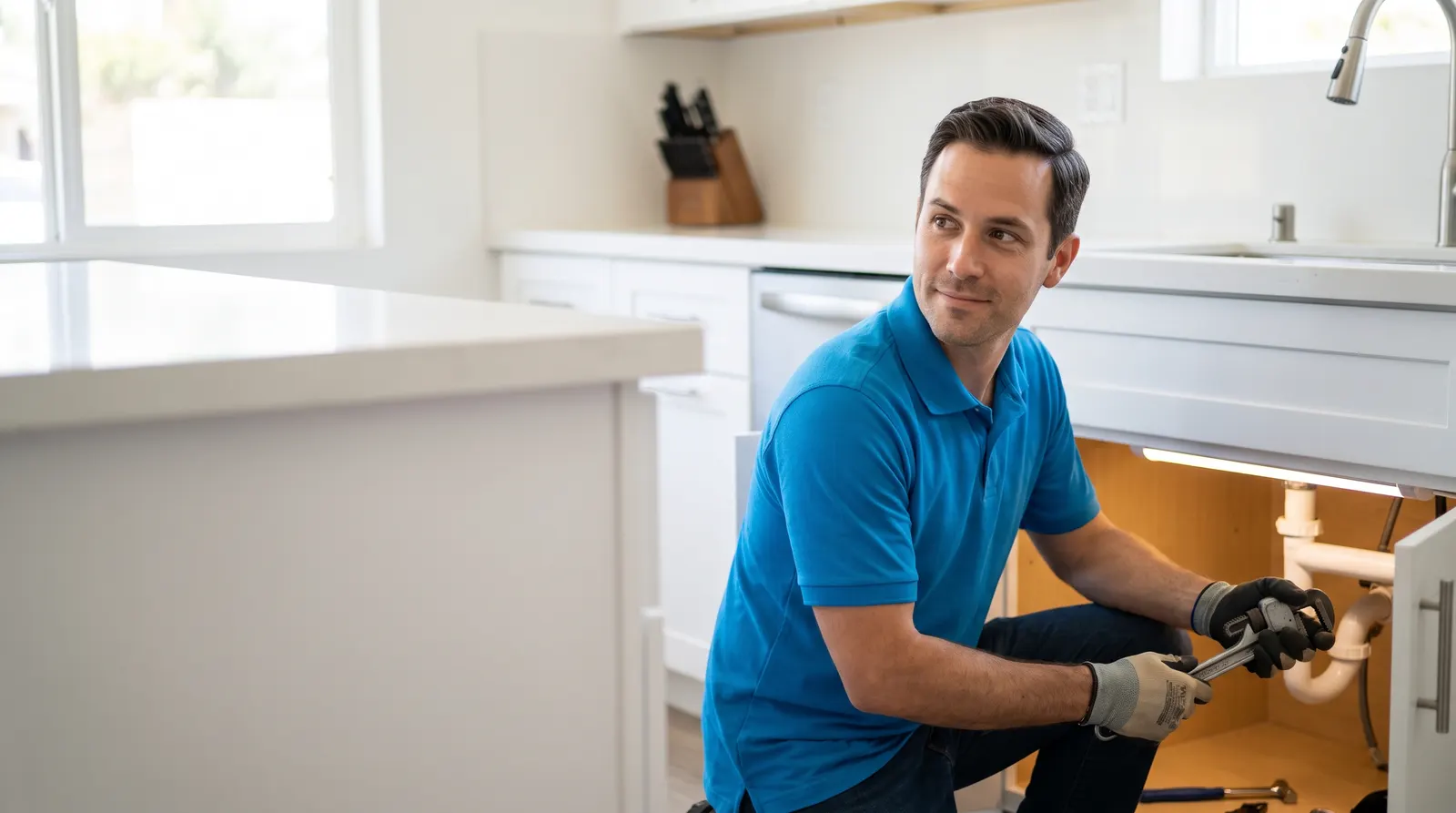
A plumber in los angeles is a state-certified plumbing technician who diagnoses, repairs, and installs pressurized potable water distribution lines, natural gas infrastructure, and sanitary drainage systems across residential structures in Los Angeles County.
Every service reflects the same meticulous attention to detail, whether it's a single job or a larger plumber project across los angeles.
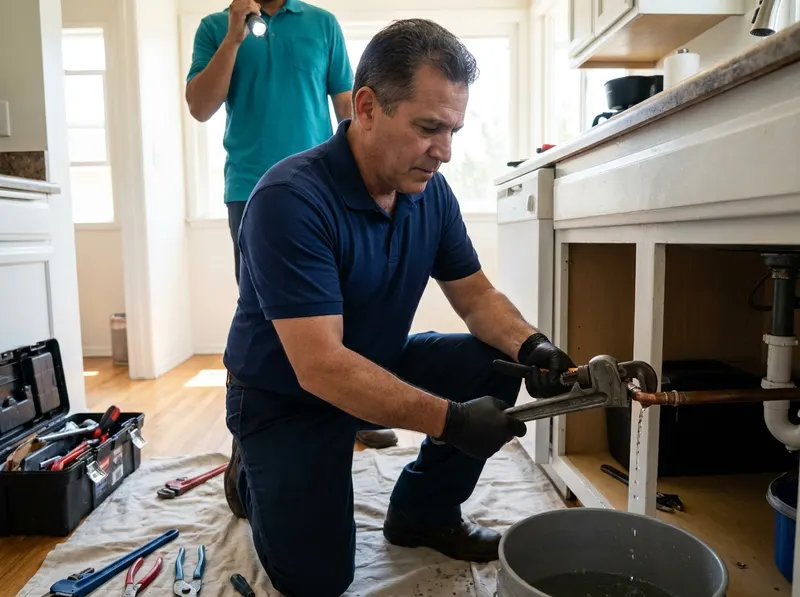
Emergency pipe leak repair isolates and resolves high-pressure potable water breaches occurring inside stud bays, under second-story subfloors, and within foundation perimeter zones. Service technicians quickly determine the origin of uncontained water spraying behind drywall or surfacing through hardwood planks, shutting off local brass isolation stops or utilizing curb keys on municipal street meter valves to halt active property damage. Technicians systematically cut open minimal wall or ceiling drywall cavities, extract split or pinholed copper, CPVC, or galvanized iron piping, and introduce permanent structural connections utilizing lead-free silver-soldered Type L copper couplings or engineered cold-expansion ASTM F1960 PEX fittings. Every mechanical connection undergoes sustained hydrostatic operational pressure testing to verify that repaired potable water lines endure municipal distribution pressures fluctuating up to 80 PSI without weeping.
Get a quote →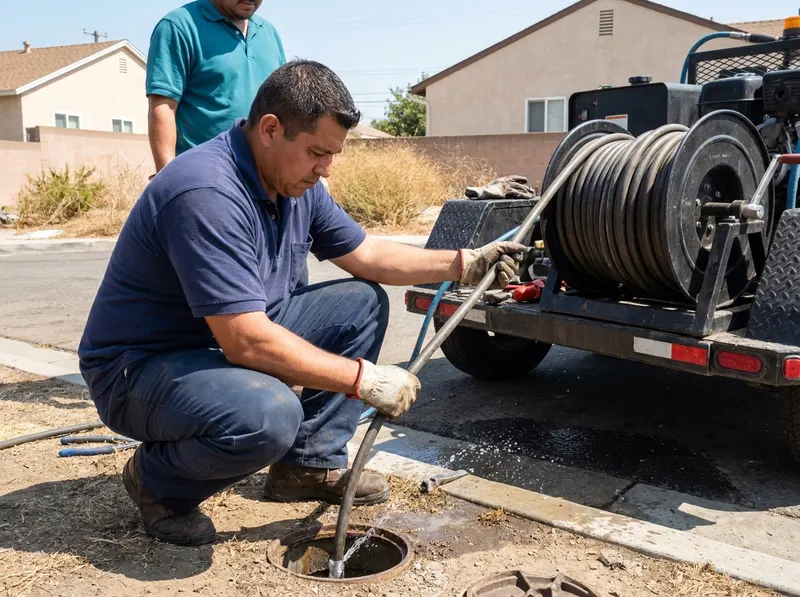
Main sewer line hydro-jetting utilizes trailer-mounted, high-output water pump machinery to blast municipal-grade lateral drains clear of stubborn grease blockages, structural scale, and dense root balls. Pumping water volumes of 12 to 18 gallons per minute through specialized stainless-steel rotating nozzles at sustained operating pressures reaching 4,000 PSI, this process scours the internal circumference of 3-inch, 4-inch, and 6-inch underground sewer pipes clean. Unlike conventional snaking blades that simply bore a narrow opening through an obstruction, hydro-jetting shears intrusive Ficus microcarpa, Southern California black walnut, and invasive eucalyptus roots flush with the pipe walls while washing pulverized debris down into the municipal main. The process fully flushes out years of hardened cooking fats, industrial surfactant sludge, and mineral accumulations without requiring aggressive mechanical blades that can crack fragile vitrified clay pipe bells or corroded cast-iron pipe bottoms.
Get a quote →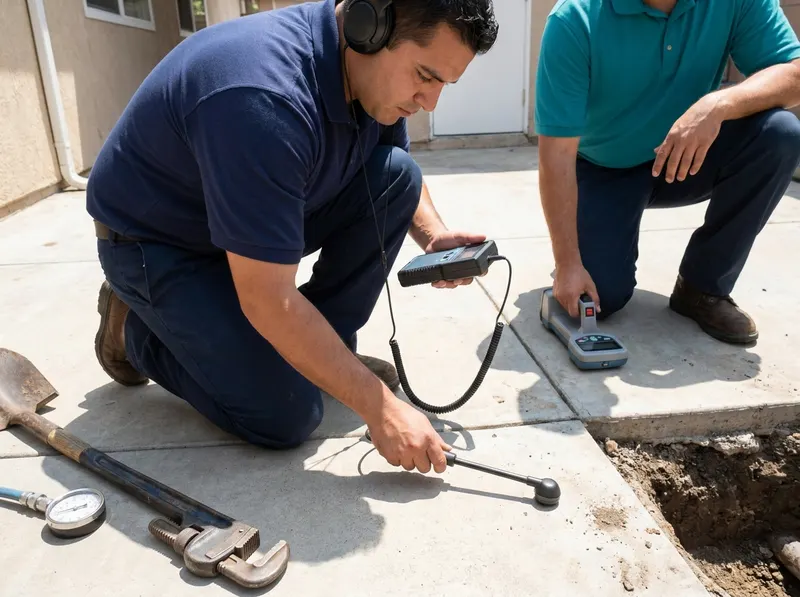
Slab leak detection utilizes advanced non-destructive electro-acoustic listening systems, digital tracer gas injection methods, and calibrated high-resolution thermal imaging cameras to isolate pressurized water leaks buried deep beneath monolithic poured concrete foundations. When building owners notice hot spots on hardwood flooring, unexplained increases in LADWP utility water billing, or the continuous audible sound of running water behind baseboards, specialized diagnostic technicians locate the sub-slab breach down to the exact square foot without wholesale floor demolition. Repair strategies depend directly on the structural composition of the foundation: crews can carefully breach localized concrete with pneumatic breakers to isolate and braze failing underground soft copper lines, or they can execute an overhead supply line reroute. Rerouting bypasses abandoned sub-slab copper lines entirely by running flexible, seamless PEX-a piping up through interior wall chases, attic framing, and ceiling cavities, permanently removing pressurized water lines from corrosive, shifting subsurface soil.
Get a quote →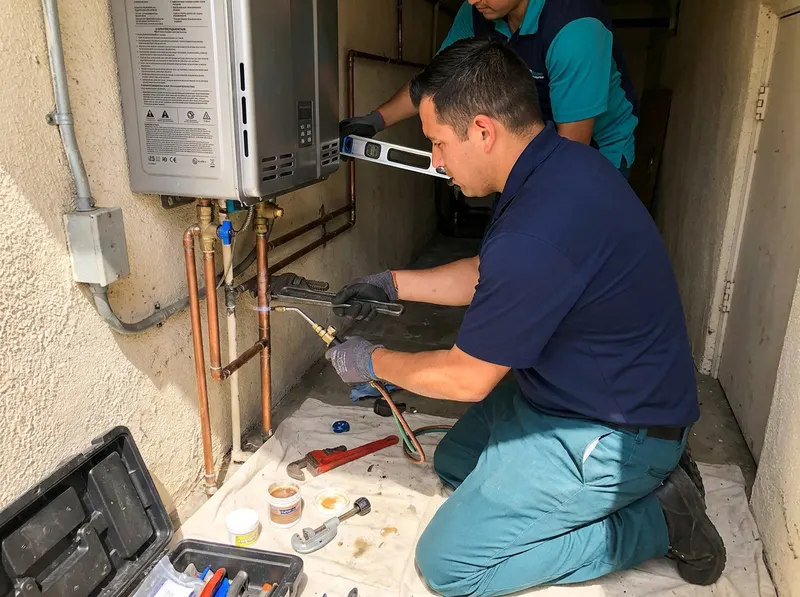
Tankless water heater installation upgrades inefficient, sediment-choked storage water vessels to high-efficiency, on-demand condensing gas water heating units engineered to deliver uninterrupted domestic hot water. Technicians calculate exact building hot water fixture-unit demands to size gas units ranging from 160,000 to 199,000 BTU, guaranteeing adequate flow across multiple bathrooms during simultaneous operational demand. This comprehensive service involves upgrading restrictive 1/2-inch gas lines to 3/4-inch or 1-inch schedule 40 black steel pipe to ensure proper gas input during ignition spikes, coring exterior wall penetrations for dedicated Category IV stainless steel or direct-vent polypropylene exhaust flues, and running acid-resistant PVC condensation drainage lines. Every tankless installation is outfitted with lead-free brass full-port isolation service valves to facilitate routine annual descaling cycles that strip hard mineral scale from sensitive copper and stainless-steel heat exchangers.
Get a quote →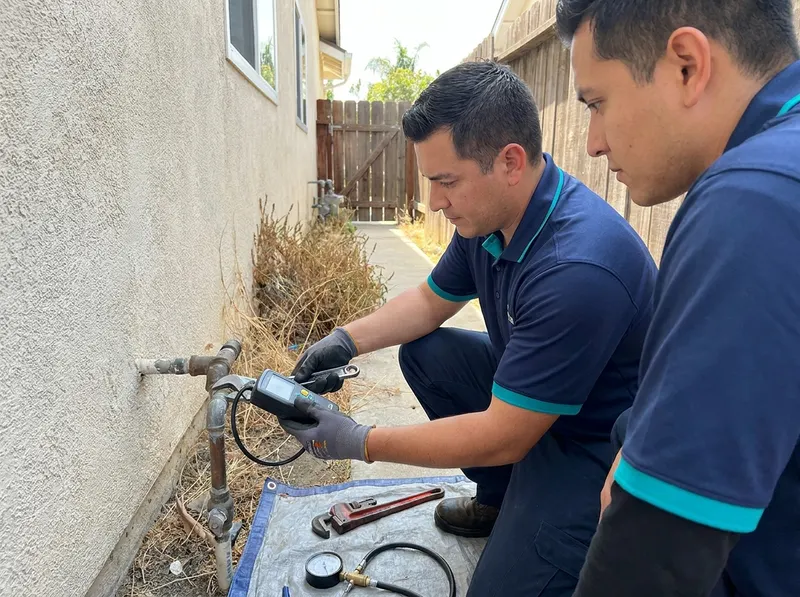
Gas line leak detection and repair addresses dangerous failures in residential fuel distribution networks serving indoor water heaters, kitchen cooktops, central furnaces, outdoor fire pits, and pool heaters. Technicians utilize digital combustible gas sniffers calibrated in parts per million (PPM) alongside electronic micro-manometers to execute sensitive pressure decay drop tests that confirm minute breaches within threaded black iron, corrugated stainless steel tubing (CSST), or underground yellow polyethylene gas pipe systems. When natural gas odors or seismic movements reveal a pipe integrity failure, technicians trace the supply grid, disconnect damaged threaded fittings or corroded underground joints, and replace compromised sections to comply with City of Los Angeles Mechanical and Plumbing Codes. Installations incorporate certified manual brass shut-off valves, modern appliance dirt-leg sediment traps, and code-mandated earthquake-triggered automatic gas shut-off valves (AGSOVs) at the gas meter manifold.
Get a quote →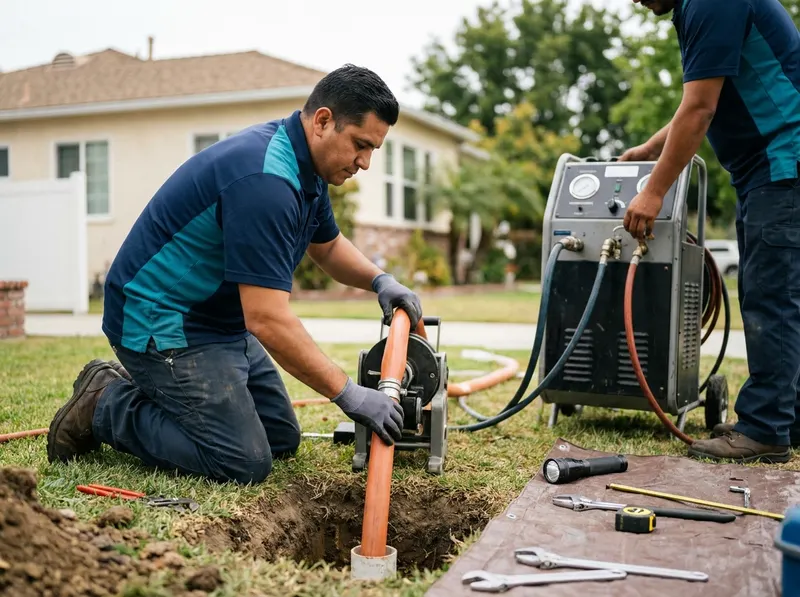
Trenchless sewer relining rehabilitates broken, fractured, or root-infested vitrified clay and corroded cast-iron building sewer lines without destroying paved driveways, stamped concrete patios, or mature exterior landscaping. Utilizing cured-in-place pipe (CIPP) technology, technicians access the municipal sewer lateral through a standard single exterior two-way cleanout. After mechanical line descaling and hydro-jet preparation, a continuous seamless felt tube saturated with a thermosetting epoxy resin matrix is inverted through the damaged sewer line using calibrated pneumatic air inversion equipment. An internal bladder inflates under sustained pressure to press the epoxy lining firmly against the inside perimeter of the damaged host pipe. Once cured via ambient air, circulating hot water, or UV light, the resin hardens into a smooth, structural pipe-within-a-pipe featuring a 50-year design life that seals all joint seams against root entry and bridges missing structural sections.
Get a quote →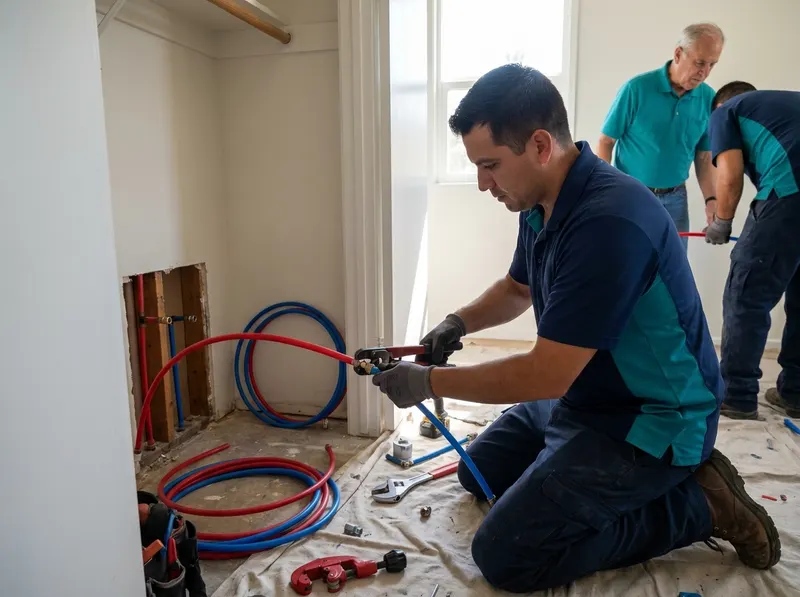
Whole-home repiping replaces deteriorating, corroded galvanized iron piping or defective early-generation plastic supply networks with premium Type L copper tubing or ASTM F1960 cold-expansion Class-A PEX piping. Technicians map out home layout schematics to strategically cut precise access points in finished drywall, run new continuous trunk-and-branch or dedicated home-run manifold supply lines, and install modern quarter-turn ceramic disc shut-off valves at every plumbing fixture. This comprehensive service permanently resolves widespread residential water quality problems such as red-brown rust discoloration, metallic tastes, and low volume delivery occurring when showers run while washing machines fill. The completed supply network is hydrostatically pressure tested to 100 PSI, inspected by local municipal building authorities, and restored with neat, paint-ready drywall patches over all work openings.
Get a quote →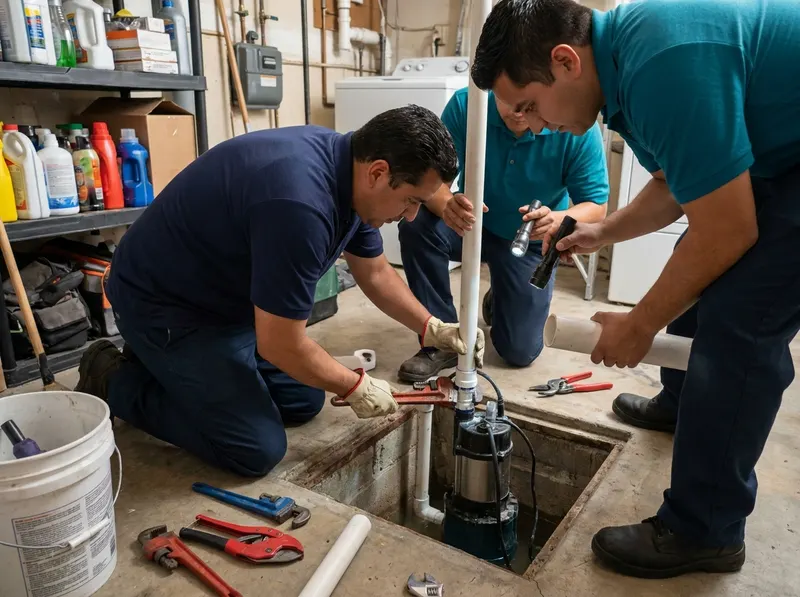
Sump pump and basement drainage repair ensures subterranean crawlspaces, elevator pits, and finished basements remain completely dry against severe groundwater intrusion and intense seasonal rainfall. Technicians evaluate existing subterranean water basins, clean out collected silt, sand, and stone sediment, and install high-performance 1/3-horsepower to 1/2-horsepower cast-iron submersible drainage pumps paired with heavy-duty full-flow flapper check valves to prevent backflow. Systems are engineered with dual mechanical float switches for failsafe pump activation and can be integrated with auxiliary auxiliary-powered 12-volt battery backup systems that kick in automatically when local electrical grids fail during severe storms. Technicians inspect dedicated exterior discharge piping, verifying lines deposit water safely away from structural concrete footings into authorized municipal storm channels or gravity-fed street retention curb outlets.
Get a quote →You get a firm, itemized quote for your plumber before any work begins, no surprises, no pressure.
Careful prep, tidy work, and a full cleanup when we are done. We treat your home and belongings like our own.
The same trusted, background-checked team from the first call to the final check.
Determining the correct diagnostic and restoration methodology requires isolating whether a plumbing failure originates from a localized fixture trap or a compromised subterranean building lateral. If an isolated plumbing fixture such as an upstairs lavatory, second-floor shower pan, or kitchen sink drain stalls while other fixtures flow freely, mechanical cable snaking through an accessible cleanout or fixture trap arm delivers rapid clear-through results at lower direct cost. If subterranean waste begins bubbling upward through a ground-floor tub or floor drain whenever a toilet is flushed, the entire building sewer lateral is obstructed, requiring motorized hydro-jetting paired with an in-pipe high-definition fiber-optic video camera inspection.
The mechanical trade-off rests on immediate expense versus long-term clearance longevity: traditional continuous-steel mechanical snaking pierces a narrow 2-inch to 3-inch relief void through soft accumulations or hair clogs without stripping hardened grease or scouring perimeter pipe walls, whereas high-pressure hydro-jetting delivers 4,000 PSI water across a 360-degree radius to strip mineral calcification and sever thick ficus root knuckles out of the entire pipe circumference. When evaluating domestic potable water supply systems in homes constructed before 1970, property owners encounter recurring pinhole leaks in degrading galvanized iron piping networks. Choosing between localized spot-patch repairs and an engineered whole-home repipe depends on material age and interior pipe integrity.
Applying an external stainless-steel repair sleeve or replacing an individual 2-foot section with brazed Type L copper provides an economical short-term patch for an isolated emergency leak; however, aging galvanized pipe networks invariably suffer from accelerated electrochemical oxidation that continues producing secondary pinhole failures behind finished walls. A complete repipe using cross-linked polyethylene (PEX-a) or rigid Type L copper tubing demands higher initial capital outlay but permanently establishes balanced line pressure, eliminates heavy iron-oxide tap contamination, and protects finished interiors against continuous hidden moisture leaks. Property managers and homeowners selecting water heating infrastructure must similarly weigh initial equipment investment against sustained operational capacity.
A conventional atmospheric 50-gallon storage tank heater installs within a smaller equipment footprint at a substantially lower total purchase cost; conversely, a tankless continuous on-demand heating unit requires a minimum 3/4-inch dedicated gas supply feed, high-velocity exterior stainless-steel or PVC venting, and dedicated electrical connections, yet yields infinite operational hot water while preventing the major catastrophic flood hazards that accompany aging 50-gallon pressurized storage tanks when tank bottoms rust through.
Every project gets a firm, written price after a free on-site visit. Ranges below for orientation.
Tell us about your plumber job and we'll send a clear, written quote, usually the same day. Or just call and talk to a real los angeles pro.
(738) 203-6342
Plumbing infrastructure throughout Los Angeles faces severe operational stresses stemming from a combination of historic architectural materials, complex topography, and stark Mediterranean climate swings. In historic flatland neighborhoods like Hancock Park, Los Feliz, and Koreatown, thousands of homes constructed between 1910 and 1940 continue to rely on original vitrified clay sewer laterals fitted together with unsealed mortar joints. Aggressive root systems from century-old Ficus microcarpa, jacaranda, and eucalyptus trees planted along city parkways constantly seek water vapor escaping these unsealed pipe collars, infiltrating joints and generating massive root blockages that trigger sudden household sewer overflows. In distinct contrast, hillside properties situated along the steep slopes of the Santa Monica Mountains, including residences in Studio City, Sherman Oaks, and Silver Lake, experience distinct structural earth shifts. The region's rich expansive montmorillonite adobe clay soils shrink dramatically during scorching, dry summer heatwaves and swell rapidly during heavy winter Pacific atmospheric river deluges. This continuous subterranean soil movement exerts tremendous shear stress on rigid subterranean water service lines running from city meters on avenues like Los Feliz Boulevard, Ventura Boulevard, or Glendale Boulevard into residential foundations. Furthermore, high municipal delivery pressures piped down mountain gravity corridors from LADWP distribution reservoirs frequently spike over 100 PSI, prematurely rupturing un-regulated interior copper pipe networks, cracking internal valve cartridges, and blowing out water heater pressure-relief valves in homes that lack calibrated pressure-reducing valves.
Free estimates for los angeles & the surrounding area.
 Los Angeles HandyPro